
Before you try another supplement, another sensory tool, another breathing exercise, or another strategy hoping this will finally be the thing that helps your child regulate their nervous system, take a breath yourself. Let’s talk about something most parents, and even many providers, haven’t been told yet.
Here’s the truth: you can’t regulate a nervous system that still needs to be repaired.
If you’re exhausted from trying intervention after intervention for your child’s nervous system dysregulation without seeing lasting changes, it doesn’t mean you’re doing something wrong. It may mean something foundational has been missing from the plan all along. Before you can expect better regulation, focus, sleep, sensory processing, or adaptability, you have to look at the nervous system underneath it all. And that’s exactly where we want to start.
We See This Every Week
We are huge believers in nervous system regulation. Breathwork, yoga, nutrition changes, supplementation, functional medicine, sensory tools, and other regulation strategies can all have real value. We’re genuinely glad these conversations are becoming more common, because your child’s nervous system deserves the spotlight. But there’s an important piece of the conversation that often gets missed: regulation only works when the nervous system has the capacity to regulate.
Because here’s what we hear from parents over and over again in our office:
“We’ve tried everything, and nothing seems to stick.”
Maybe you’ve lived this too. You find something that seems to help. A new supplement, a new therapy, a calming routine, a sensory tool, or a new strategy. For a few weeks, things start looking up. Then something shifts. The anxiety comes back. The meltdowns return. The gut issues flare again. Sleep falls apart. Suddenly, it feels like you’re right back where you started.
It’s not that these tools don’t work. It’s that they may be trying to regulate a nervous system that is still stuck in a state of dysregulation. When the underlying nervous system dysfunction hasn’t been addressed, even the best regulation strategies can struggle to create lasting change. Sometimes, the nervous system doesn’t need another tool to regulate. It needs the foundation repaired first.
Repair vs. Regulation: What’s the Difference?
This is the distinction we wish every family understood before spending months, or even years, cycling through strategies that seem to help for a little while but never quite create lasting change.
Nervous system repair addresses the actual dysfunction happening within the nervous system. It looks at the interference and disruption created by accumulated stress, trauma, and other factors that can leave the nervous system stuck in a dysregulated state. In our approach, this is the neurological interference we refer to as subluxation.
Nervous system regulation focuses on the tools and practices that help an already-intact nervous system shift into calmer, more adaptable states. Breathing exercises, meditation, cold therapy, sensory strategies, supplements, and other regulation tools can all be valuable. But they are working with the nervous system you already have. They aren’t necessarily addressing what is keeping that system stuck in dysregulation in the first place.
Think of it this way: repair is fixing the engine. Regulation is learning how to drive it smoothly. You can take every driving lesson available, but if the engine itself isn’t working properly, you’re not going very far. The same is true for the nervous system. Regulation strategies can be incredibly helpful, but they work best when the underlying system has the capacity to respond to them.
Or think about the electrical wiring in your home. You can plug in every new device, tool, and gadget you can find, but if the wiring itself is faulty, adding more equipment isn’t going to fix the problem. You have to address the foundation first.
That’s why we believe in repair before regulation. Before asking a child’s nervous system to calm down, adapt better, sleep better, digest better, or handle stress differently, it’s worth asking a deeper question: Is their nervous system actually functioning the way it should?
Your Body Remembers More Than You Think
You’ve probably heard the phrase, “the body keeps the score.” There’s truth to that idea, but it goes deeper than most of us realize. Stress and trauma don’t just affect the mind. They can leave lasting patterns throughout the body and nervous system, often outside of our conscious awareness, including within what we call the neurospinal system.
This is why a difficult day, a stressful experience, a toxic exposure, or emotional overload doesn’t always feel like something that simply stays “in your head.” These stressors can influence the way your body holds tension, processes information, and responds to the world around you. And the same thing can happen in your child’s developing nervous system.
When the body encounters more stress than it can effectively process, the nervous system shifts into protection mode. That response is incredibly intelligent and necessary for survival in the moment. The problem is when the nervous system doesn’t know how to shift back out of that protective state. Over time, this can create patterns of dysfunction and dysregulation that continue long after the original stressor is gone.
Here’s the piece that changes the conversation: you can’t be fully in growth and protection at the same time. When the nervous system becomes stuck in a sympathetic-dominant, survival-oriented state, what we call Sympathetic Dominance, the body can have a much harder time adapting, healing, and regulating. Meditation, supplements, breathing exercises, and other regulation tools can certainly support the nervous system, but they may not address the deeper neurological patterns keeping the system stuck.
You simply can’t talk your way out of trauma stored in the neurospinal system, brainstem, and vagus nerve — just like you can’t breathe your way out of physical subluxation patterns that may go back to birth.
The Perfect Storm Our Kids Are Facing
We all know modern life can be stressful for us as adults. What many parents, and even many providers, don’t realize is how early that stress and strain can begin. For some children, the story starts during pregnancy or birth, long before they ever experience the pressures of school, screens, schedules, and everyday life.
This is what we call the Perfect Storm:
- Prenatal stress — when mom experiences significant stress, anxiety, illness, or certain medications during pregnancy, the developing nervous system is exposed to that stress before birth.
- Birth interventions — C-sections, forceps, vacuum extraction, and induction can all introduce significant physical stress during a baby’s transition into the world, particularly around the delicate brainstem and upper neck.
- Early childhood stressors — colic, reflux, constipation, feeding challenges, and sleep struggles are often dismissed as normal phases, but they can also be signs that a developing nervous system is having a harder time adapting.
- Repeated antibiotic use — often following recurrent ear infections and other illnesses, which can also impact the developing gut and immune system and contribute to a bigger picture of nervous system stress.
And these stressors don’t always happen in isolation. They can compound one another. When a child moves through several of these experiences, the nervous system may become increasingly stuck in patterns of dysfunction and dysregulation. By the time symptoms show up as anxiety, sensory challenges, ADHD, sleep issues, digestive problems, or difficulty regulating emotions, the root of the problem may be much deeper than the symptom itself.
This doesn’t mean the other approaches are wrong, and it doesn’t mean families should stop using tools that help. It means we also have to ask whether there is an underlying nervous system pattern that those tools were never designed to address. Sometimes the nervous system needs more than another strategy. It needs the foundation addressed first.
If This Sounds Familiar, Your Body Is Telling You Something
Here are some of the patterns we pay attention to when we’re trying to understand whether nervous system repair may need to come before more regulation strategies:
- Therapies and interventions seem to help temporarily, but the changes don’t last
- Gut health protocols create improvement for a while, then eventually plateau
- Symptoms repeatedly return after periods of meaningful progress
- Small triggers create disproportionately big reactions
- Your child quickly returns to a stressed or reactive state, even after calming activities
- Regulation strategies seem to work one day and completely fall flat the next
If you’ve been nodding along, please hear this: you haven’t failed, and neither has your child. You may simply have been trying to regulate a nervous system that doesn’t yet have the capacity to consistently regulate itself.
And that’s an important distinction.
What Can Change When the Foundation Is Addressed
This is the part that gives us so much hope for the families we work with. When the nervous system becomes more adaptable and better able to shift out of a protective state, the other things you’re already doing may have a better foundation to work from.
- Breathwork becomes more effective
- Supplements are better absorbed and utilized
- Dietary changes create more significant, lasting impact
- The body’s own innate healing capacity can finally activate
Nervous system repair doesn’t replace your regulation tools — it opens the door for them to finally work as intended.
Where to Go From Here
Your family probably doesn’t need another random health hack or another strategy to add to an already overwhelming list. You need a clearer picture of what your nervous system is actually doing underneath the symptoms.
That’s where Neurologically-Focused Chiropractic Care comes in.
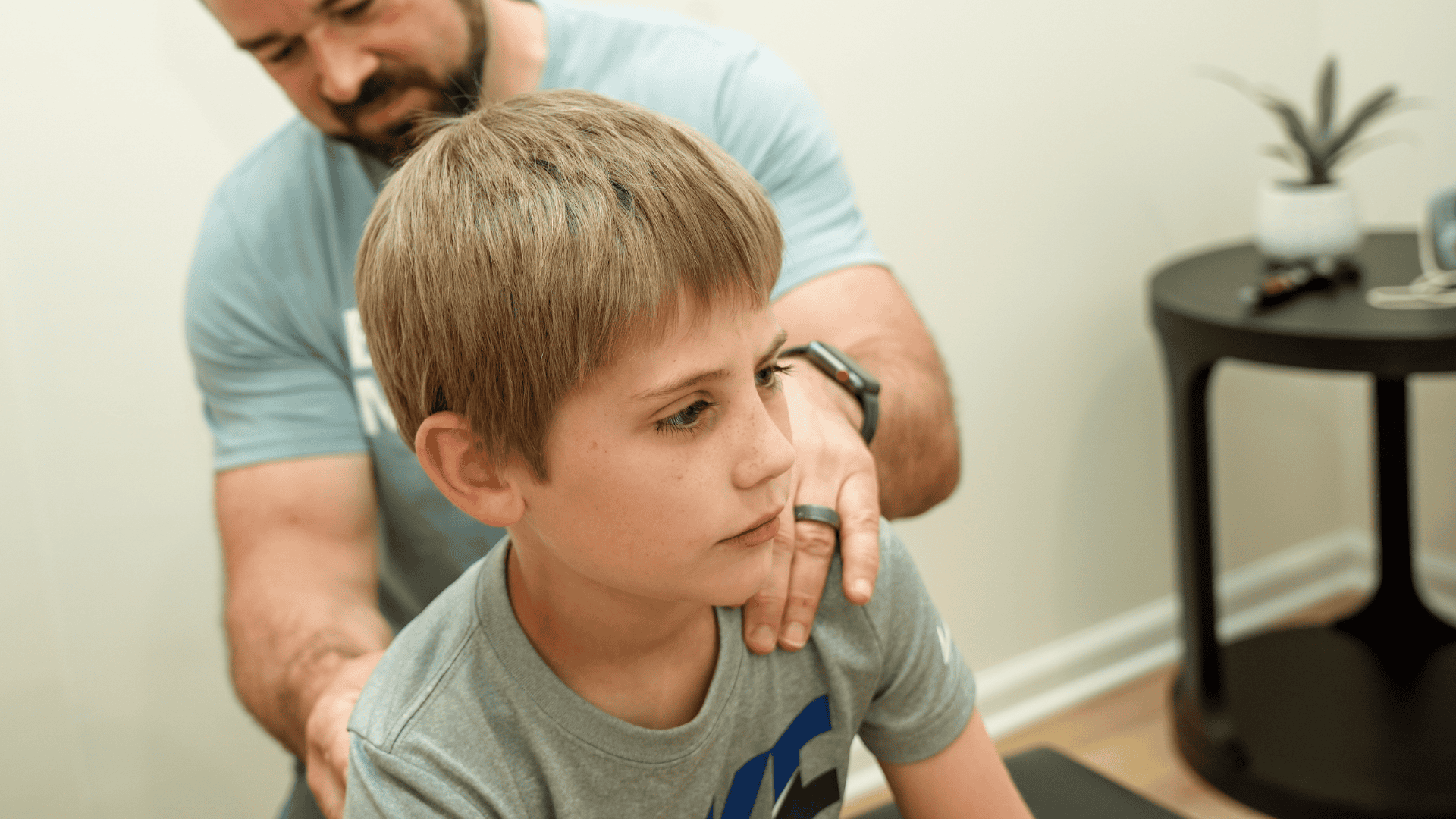
At 3T Family Chiropractic in Olathe, KS, we start by looking at the nervous system itself. Our Neurological INSiGHT Scans help us measure patterns of stress, tension, posture, and nervous system adaptability. From there, we use gentle, specific Neuro-Tonal Adjustments designed to address the neurological patterns we find and support a nervous system that has become stuck in protection mode.
Whether you’re looking for neurologically focused pediatric chiropractic care for your child or nervous system support for yourself, our goal is to help you understand what’s happening beneath the symptoms and create a plan built around the foundation first.
If this is resonating with you, we’d love to talk. Reach out to 3T Family Chiropractic in Olathe to schedule your initial consultation and INSiGHT Scans. We’ll help you understand what your nervous system is communicating and whether nervous system repair may be the missing piece you’ve been looking for.
Not local? You can also explore the PX Docs directory to find a neurologically focused chiropractor near you.
You don’t need to keep adding more and more tools. Sometimes, the next step is going deeper and addressing the foundation first.