
If your teen has been diagnosed with POTS, or Postural Orthostatic Tachycardia Syndrome, you already know how quickly it can derail a young person’s life.
One day they’re active, thriving, and full of energy. The next, they can’t stand up without their heart racing. They struggle to make it through a school day without feeling dizzy or like they might faint. Migraines, crushing fatigue, and brain fog can make even simple tasks and decisions feel overwhelming.
And the answers most families are given? “We don’t really know what causes it.” “Just increase your salt intake.” “Drink more water.” “Try standing up more slowly.”
Meanwhile, your child is missing school, stepping away from sports and activities they love, and becoming increasingly frustrated, anxious, or isolated because their body doesn’t seem to be cooperating.
Here’s what I want you to know as a parent: there may be more to the picture than managing POTS symptoms. Understanding how your child’s nervous system is functioning can be an important piece of the puzzle.
At 3T Family Chiropractic, our approach to neurologically-focused chiropractic care looks beyond the symptoms to understand how the nervous system is responding, adapting, and regulating. Because when a teen’s nervous system is struggling to properly coordinate things like heart rate, blood flow, balance, and stress responses, there may be more worth exploring than simply adding more salt.
This article is for parents of teens and young adults who have been diagnosed with POTS, or who are watching their child struggle with unexplained dizziness, a racing heart, crushing fatigue, migraines, and brain fog. If you’re ready to look beyond the symptom list and better understand the neurological and nervous system factors that may be contributing to what your child is experiencing, keep reading.
Tommi’s Story
At 17, Tommi was wildly active and athletic. She rode horses, cheered, maintained A-B grades, and had her whole future ahead of her. Then POTS changed everything.
Her mom described it best on her intake paperwork: overwhelming fatigue that kept Tommi in bed all day, migraines and brain fog that made schoolwork nearly impossible, tachycardia, low blood pressure, chest pain, insomnia, anxiety, and depression. At one point, she couldn’t even walk to the bathroom without passing out. Her entire junior year was gone.
Like most families, Tommi’s family started with the standard approach to managing POTS. But when those strategies weren’t enough, they kept searching for answers and a better understanding of what was happening in her body.
That search eventually led them to Neurologically-Focused Chiropractic Care. Slowly at first, and then more noticeably, Tommi began coming back to life. Today, she’s heading to college on scholarship, back to cheering and horseback riding, and even planning to become a nervous system chiropractor herself.
Tommi’s story is a powerful reminder that sometimes looking at the nervous system through a different lens can open the door to possibilities families didn’t know were there.
POTS Is a Nervous System Problem, Not a Mystery
POTS affects an estimated 1 to 3 million Americans, with young women making up a large percentage of those diagnosed. While a significant increase in heart rate after standing is a key part of the diagnosis, POTS is about much more than a racing heart. Dizziness, brain fog, migraines, fatigue, digestive issues, exercise intolerance, and other symptoms can all be part of the picture.
At the center of POTS is dysautonomia, a dysfunction or imbalance in the Autonomic Nervous System, which helps regulate essential functions like heart rate, blood pressure, digestion, and blood flow. Research has also shown just how significantly POTS can impact quality of life, with some patients reporting levels of impairment comparable to those seen in people undergoing kidney dialysis.
This is not simply something that is “in their head.” There are real neurological and autonomic processes happening in the body. That’s why at 3T Family Chiropractic, we believe it’s important to look at how the nervous system is functioning, including the relationship between the autonomic nervous system, brain-body communication, the vagus nerve, and the neurospinal system.
The Vagus Nerve Holds the Answers
The vagus nerve is a major communication pathway between the brain and the body and plays an important role in regulating functions like heart rate, digestion, and other autonomic processes. When it’s stuck in a state of subluxation — neurological interference — it simply can’t do its job, and this brain-body communication can become an important piece of the POTS picture.
Research suggests that autonomic nerve dysfunction plays a role in some forms of POTS, including neuropathic POTS. When the Autonomic Nervous System has difficulty maintaining balance between the sympathetic “fight or flight” response and the parasympathetic “rest and regulate” response, the body may have a harder time adapting to changes in position, temperature, activity, or stress.
That can help explain why seemingly simple things, like standing up, taking a shower, exercising, or experiencing a stressful moment, can trigger a cascade of symptoms for someone with POTS.
At 3T Family Chiropractic, this is why we look beyond the heart rate number and consider the bigger nervous system picture. Understanding how the nervous system is communicating and regulating can provide another valuable perspective for families looking for a more complete understanding of their child’s POTS symptoms.
Restoring vagal tone is the missing piece most POTS care programs skip entirely.
The “Perfect Storm” Behind Your Child’s POTS
POTS usually isn’t as simple as one single trigger. For many families, symptoms can emerge after multiple stressors, challenges, and changes have accumulated over time. We call this the “Perfect Storm” because it’s often the combination of factors that can leave the nervous system struggling to adapt and regulate.
- Birth trauma — interventions such as forceps, vacuum extraction, or C-section can place stress on a baby’s developing nervous system
- Viruses and infections — illnesses such as mono, Lyme disease, and COVID-19 have been associated with the development or worsening of POTS symptoms in some individuals
- Autoimmune and connective tissue conditions — conditions such as Ehlers-Danlos syndrome and MCAS are frequently discussed alongside POTS and can add another layer to the picture
- Chronic stress and trauma — ongoing stress can place increased demands on the sympathetic nervous system and make regulation more difficult
- Posture and physical stress — prolonged postural strain and changes in the way the body moves can influence how the nervous system and musculoskeletal system communicate
Each layer can add to the overall stress load. By the time POTS symptoms become obvious, your child may have been navigating multiple physical, neurological, and emotional stressors for years.
That’s why we believe it’s worth looking at the whole nervous system, rather than focusing only on the symptoms that show up when your child stands. At 3T Family Chiropractic, our neurologically-focused approach looks at how the nervous system is functioning, adapting, and communicating so families can better understand the bigger picture.
What Standard POTS Care Misses
Increasing salt intake and changing positions slowly can help manage symptoms in the moment, but they don’t address the root cause. Medications may also help with things like heart rate and blood pressure, but they don’t restore autonomic balance. Symptom management is only one part of the bigger picture.
Traditional testing can provide valuable information about how the heart and cardiovascular system are responding, but families may also benefit from understanding how the nervous system is functioning and adapting. Without looking at neurological regulation, an important piece of the picture can be missed.
For families searching for a more complete understanding of their child’s POTS symptoms, the neurospinal system and autonomic nervous system can provide another important lens.
A Neurological Path Forward
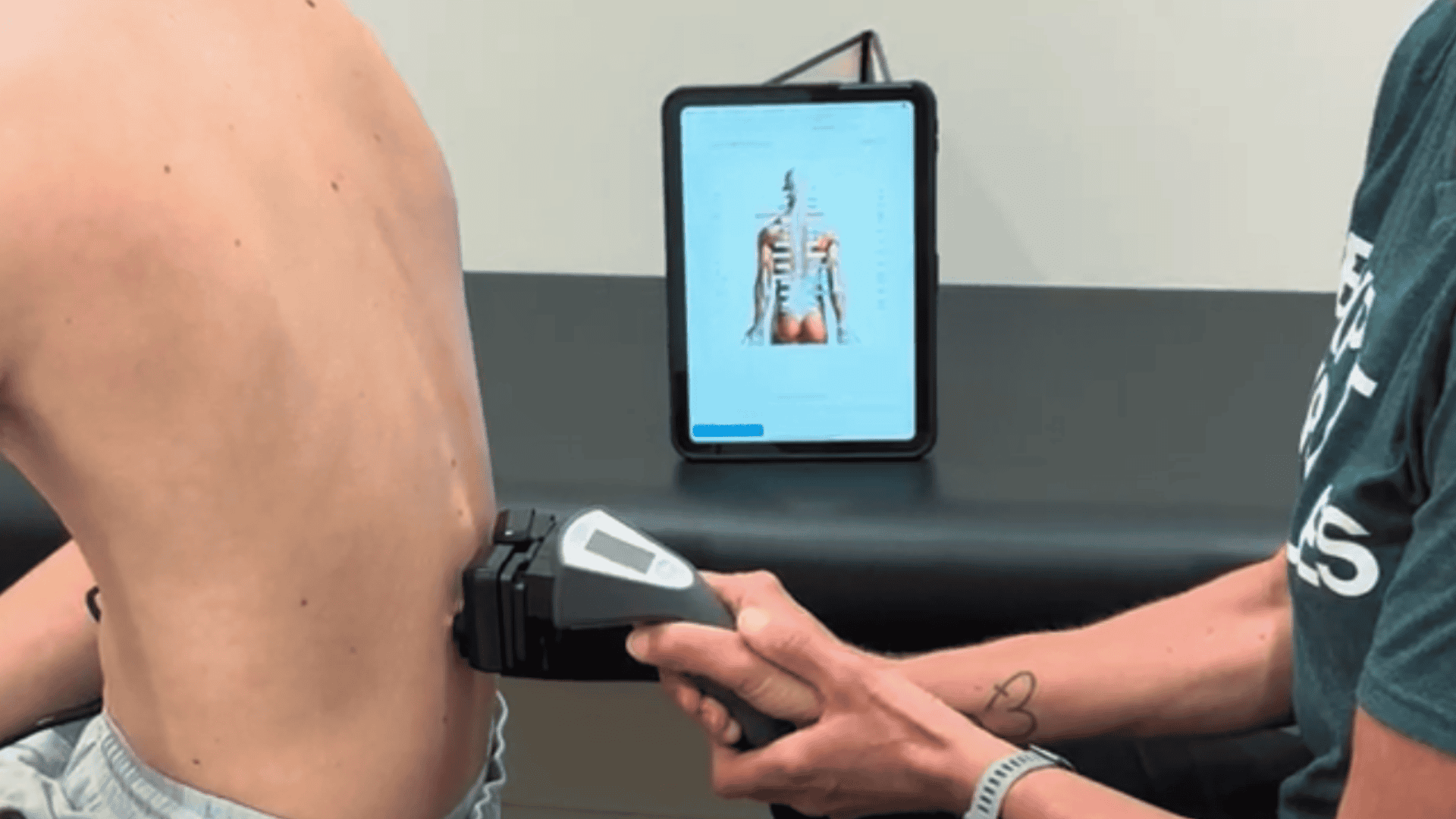
This is where INSiGHT Scans can add another layer of information. These non-invasive scans use sEMG, HRV, and neuroTHERMAL technology to provide objective information about patterns of muscle tension, autonomic regulation, and nervous system adaptability.
At 3T Family Chiropractic, we use these findings alongside your child’s history and overall presentation to better understand how their nervous system is responding and regulating. Neurologically-Focused Chiropractic Care is then individualized around those findings, with progress monitored over time rather than relying solely on how your child feels from one visit to the next.
And chiropractic care is just one piece of the bigger picture. The daily foundations still matter, too. Hydration, electrolytes, quality sleep, appropriate movement, nutrition, and working with your child’s medical team can all play an important role in supporting someone with POTS.
Your Child Deserves Real Answers
Tommi’s story is a powerful example of what can happen when families are willing to look at POTS from a different perspective. If your teen or young adult is struggling with dizziness, racing heart, fatigue, migraines, brain fog, or other POTS symptoms, they deserve more than simply being told to manage the symptoms and hope for the best. They deserve a deeper understanding of how their nervous system is functioning.
You don’t have to keep guessing, and you don’t have to stop searching for answers. There may be more to your child’s story than the symptoms you can see on the surface, and understanding the nervous system can be an important part of putting those pieces together.
Ready to get to the root cause? Give 3T Family Chiropractic a call today to schedule your child’s neurological evaluation and learn more about what may be happening within their nervous system. And if you’re not local to us, check out the PX Docs directory to find a PX Docs office near you.